The recipe
The best immersive experience in the world takes everything, at once.
We tore down the world's 100 best-rated rooms to find the recipe. It's consistent, eight ingredients, none optional. Here's each one, and where we stand on it.
First, the feeling: ours, in 90 seconds
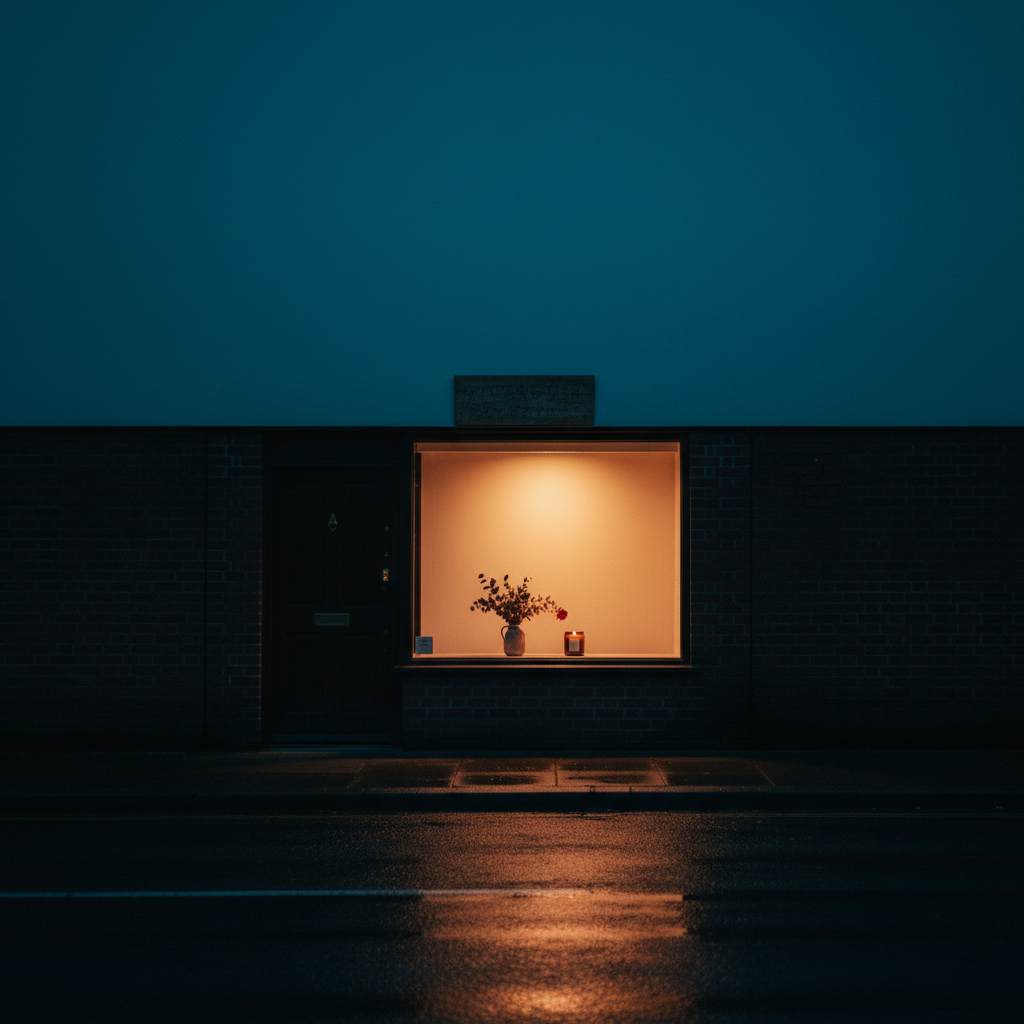
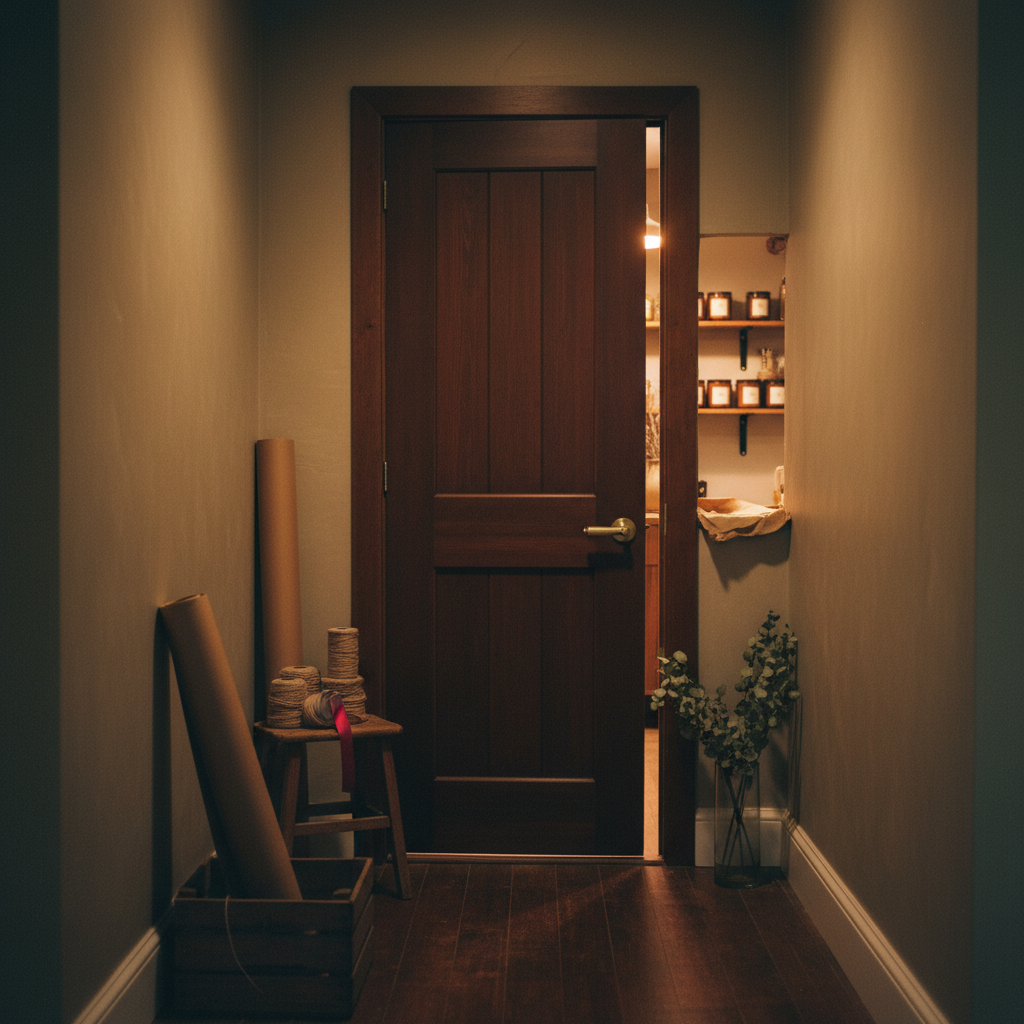
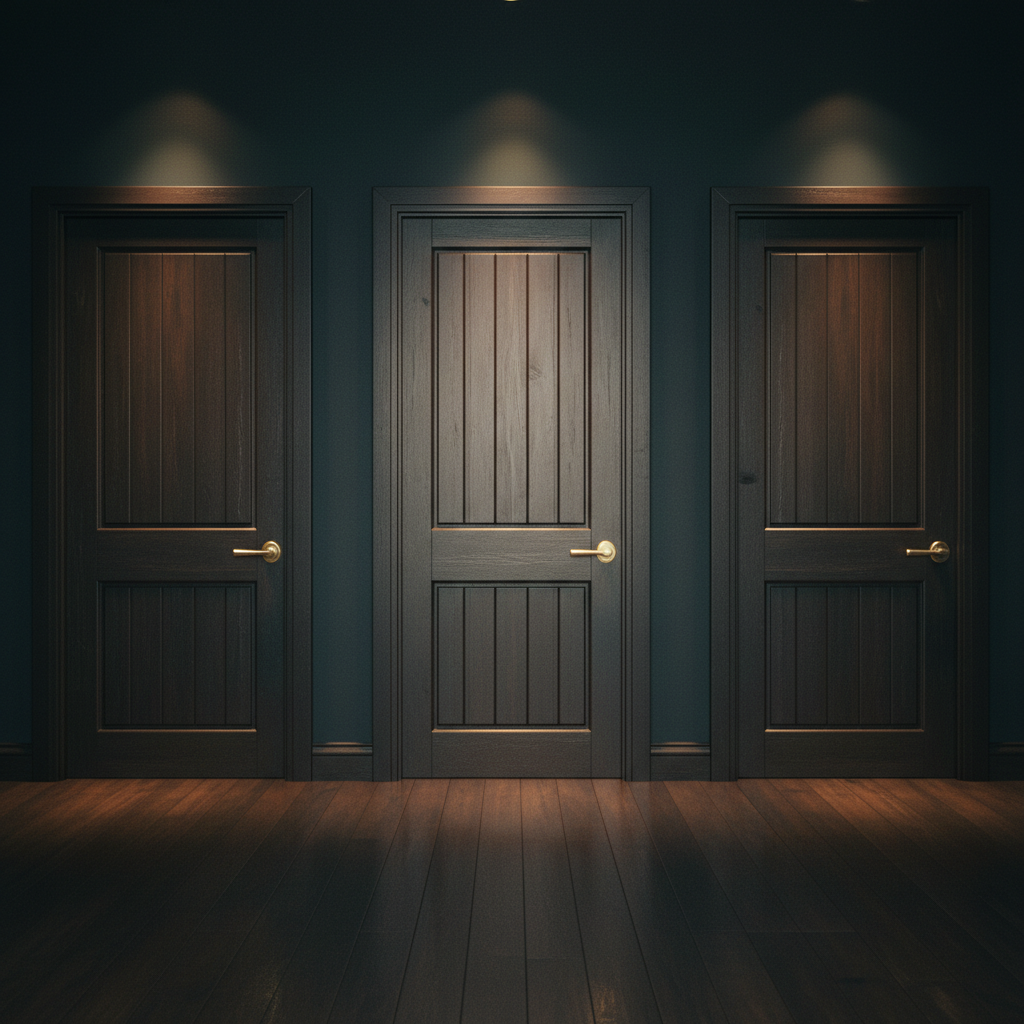
You arrive at a real candle-and-flower shop. It sells candles. You're sent to the side room, and the wall opens. Spy training: physical, playful, nothing to fail at; you learn to change your walk to beat gait analysis. Then a stressed agent pulls your team backstage, through the live control room, past screens showing the rooms you just left. You should not be here. Behind one-way glass, you're treated unfairly. Then you're taken to the other side and shown the others. How will you treat them? Ninety minutes, teams of 3–6, three doors at every turning point, no right one, only consequences. And every player leaves with a read of how they actually showed up.
◆ A world worth walking into
The best rooms are worlds: 600m² sets, 11-metre ceilings, entrances you can't find. The story starts before the ticket. Ours starts in a real flower shop that really sells flowers, and then the wall opens.
Realness is unfakeable and it markets itself: "the venue doesn't look like a venue" is a headline players write for you. We buy it with a warehouse and a shop lease, not a £1m+ set budget, the world's craft vocabulary at a fraction of its capex.
The world's #1 room: CA$1.3m, 15 months. Concealed, in-world arrivals cluster at the very top.◆ Big surprises & physical twists
Elite rooms engineer four to six "how did they DO that?" moments, walls that move, rooms that become other rooms, the gasp when the space itself turns. Disney wrote this playbook at $100m a ride. We miniaturise it.
Transition count scales directly with world ranking, and every gasp is a spoiler-safe, retellable marketing asset ("we can't tell you what happens"). The R&D is already public; we pay warehouse prices for a nine-figure vocabulary.
Top-20 rooms: 4–6 engineered transitions. Ranks 21–100: usually one.◆ Characters you believe, physical and perceived
Every top-20 room is carried by a named character voice, and by actors who are characters, not hosts. Our Pathfinder speaks to every team through the whole story, and live actors appear exactly where a human is irreplaceable.
A live performer per team caps you at escape-room economics; all-actor immersive theatre burns out on labour. An AI character per team + seven actors covering seven teams = top-20 presence at ~6× the throughput.
A voice-character anchor is top-20 baseline craft. Actor-heavy models are the category's classic cost failure.▲ Exceptional sound, light, and the neglected senses
The best rooms weaponise soundtrack and engineer smell per environment. We go one further: every player wears their own private audio channel. Nobody in the world's top 100 can whisper to just you, we can, and what you do with a secret is the drama.
Per-player audio is asymmetric information, story texture no shared-speaker room can produce, on hardware that costs less per player than a round of drinks. It's also the capture layer everything else runs on.
Smell and taste appear almost exclusively at the top of the ranking. Private per-player audio appears nowhere in the corpus.◆ Stakes that are yours
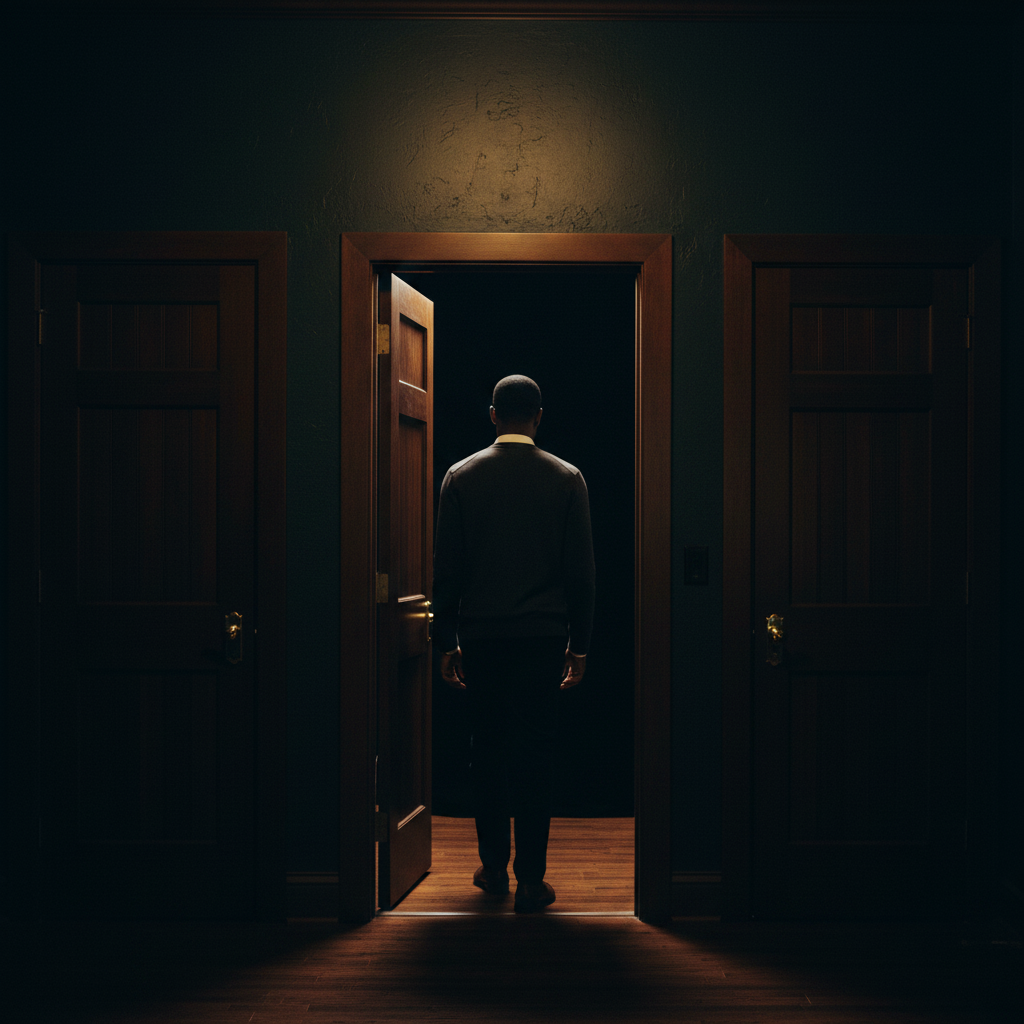
The best rooms end with moral weight, not just adrenaline, what teams retell is the choice, not the puzzle. At our turning points the team walks through one of three doors. No right one. The facts can shift under you. The consequence is real and it's yours.
Agency makes every run a unique, reportable story, "we chose the lab route and paid for it" is word-of-mouth that writes itself. Structural consequence is also what makes the behavioural read honest.
"Felt consequence" beats combinatorial branching across the whole corpus, and moral-weight endings cluster at the top.▲ The witnessed personal moment
The single most celebrated beat in the world's best rooms: one player steps forward and the team watches. Peak emotion, every time it's done well. We engineer one per act, and the private channel means everyone gets theirs, not just the brave one.
A collective beat produces one shared story; an asymmetric beat produces six different ones per booking. Six stories per team is a word-of-mouth multiplier, and the same moments are the richest behavioural signal we capture.
The witnessed opt-in solo moment is the peak-emotion technology of the world's top 20, and their peak retellability, in the same beat.▲ An ending nobody wants to leave
What separates the world's top five from everyone else is the coda, the #1 room ends with a narrated playback of the team's own behaviour, and people cry. Ours ends with who each of you actually was. By name. In the fiction.
The coda is sellable product across the corpus, recap sessions, premium tiers, €250+ add-ons. Our coda IS the corporate product: the facilitated debrief and the team report are the ending, priced.
Weak finale = hard ceiling at ~#8 in the world ranking. No room on earth has a coda whose content is personalised behavioural identity.▲ Test, iterate, renew
The best rooms take 18–36 months of iteration, and even the world's #1 fades in 2–3 years without renewal. We built the testing machine before the venue: every session recorded, transcribed, and reviewable minute-by-minute, so exceptional is engineered, not hoped for.
Rank decay is the category default; renewal is the moat. Our episodes swap on a platform that's already paid for, informed by per-session data no operator in the corpus collects. Pre-launch changes cost hundreds; post-launch, 10–100×.
Former world #1s fell to mid-table within three years, with no drop in quality. Renewal-cycle studios hold rank; static products decay.+ And the layer nobody has: the experience reads you back
Every player leaves with FRINGE, a read of how they actually showed up under pressure. Observed from what you did, not what a questionnaire asked. The world's best rooms give you a story to tell. We also hand you the one about yourself.
It's why corporate pays up to £200pp for the same 90 minutes a consumer buys for £50, and every session deepens a behavioural dataset no competitor can buy, scrape, or shortcut. The experience is the business; this layer is the moat.
Zero rooms in the world's top 100 measure their players. The $5–10bn incumbent category (Belbin, MBTI, DiSC) is 100% self-report.Grounding: the TERPECA 2025 Top 100 teardown corpus and Top-20 deep-dive synthesis (100 per-room writeups; transition, finale and coda catalogues), cross-read against the Three Doors innovation stack. ▲/◆ judgments are ours; the evidence lines are the corpus's.